Cipher Visualizers home

Tag

#AES

10 articles with this tag.

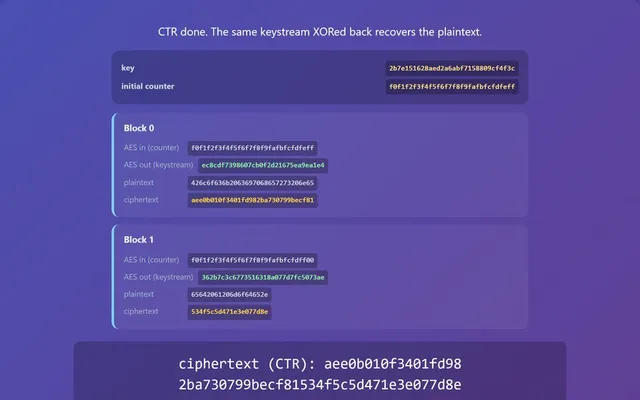
A visual representation of AES CTR, CFB, OFB, and XTS modes of operation
Modern Block Cipher Intermediate

AES Modes of Operation: CTR, CFB, OFB, and XTS

AES only encrypts one 16-byte block. A mode of operation is the wrapper that turns that single block into something that protects a whole message or an entire disk. This guide walks through four modes, CTR, CFB, OFB, and XTS, with verified NIST numbers you can check yourself.

14 min read
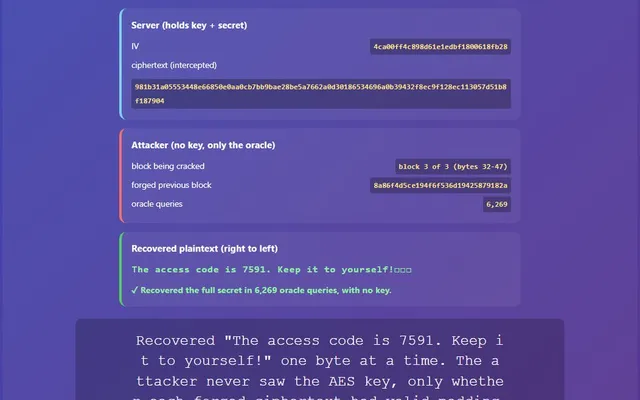
A visual representation of the padding oracle attack recovering AES-CBC plaintext one byte at a time
Modern & Applied Cryptography Breakers Intermediate

Breaking AES-CBC with a Padding Oracle

A server that only tells you whether decrypted padding was valid hands you the whole plaintext. This guide runs the real CBC padding-oracle attack against full AES-128, recovers a secret message one byte at a time, and explains why POODLE and Lucky 13 made authenticated encryption the rule.

16 min read

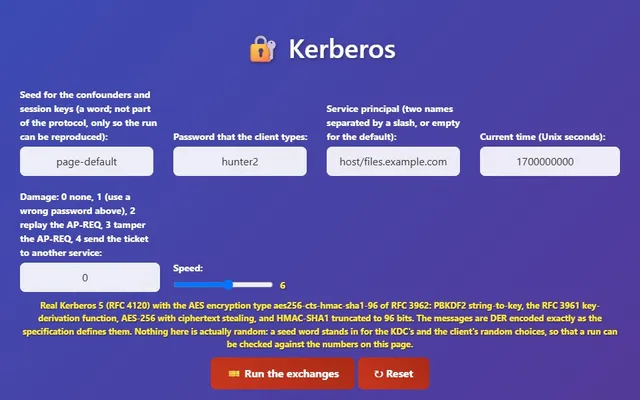
A visual representation of the Kerberos authentication protocol
Hybrid Functions Advanced

Kerberos

Kerberos is a ticket-based authentication protocol from the 1980s that still runs most corporate networks. Learn the AS, TGS, and AP exchanges, the DER message format, and the AES encryption types of RFC 3962 and RFC 8009, with Python code that reproduces the MIT reference encodings and runs a full login.

40 min read

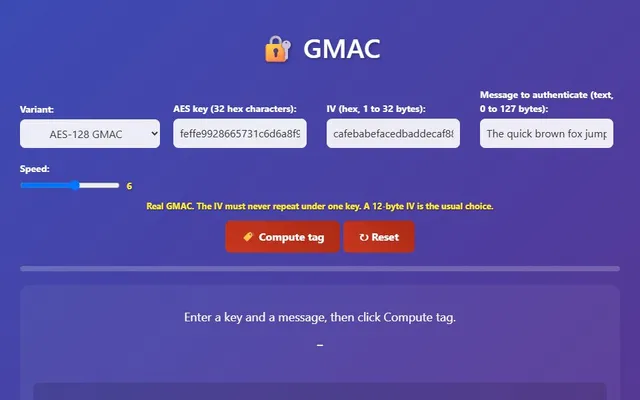
A visual representation of the GMAC Algorithm
Message Authentication Codes Advanced

The GMAC Algorithm

GMAC is the authentication-only mode of AES-GCM. It authenticates data with a polynomial hash over the field GF(2^128), masked by an AES-encrypted counter. Learn how GHASH works, why an IV must never repeat, and how a repeated IV reveals the hash key.

20 min read

A visual representation of the Whirlpool Algorithm
Hash Functions Advanced

The Whirlpool Algorithm

Whirlpool is a 512-bit hash function built from an AES-like block cipher that works on an 8 by 8 matrix of bytes. Learn how its S-box, column shift, and diffusion matrix work, how the Miyaguchi-Preneel mode turns the cipher into a hash, and how it compares with SHA-2.

16 min read

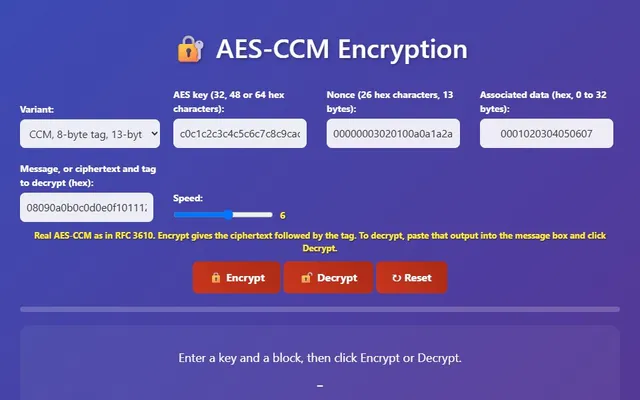
A visual representation of the AES-CCM Algorithm
Authenticated Encryption (AEAD) Intermediate

The AES-CCM Algorithm

AES-CCM encrypts and authenticates data with a single AES key by combining counter mode with a CBC-MAC. Learn how its blocks are formatted, how the tag is computed and hidden, and why CCM powers Wi-Fi security, Bluetooth Low Energy, and many small devices.

18 min read

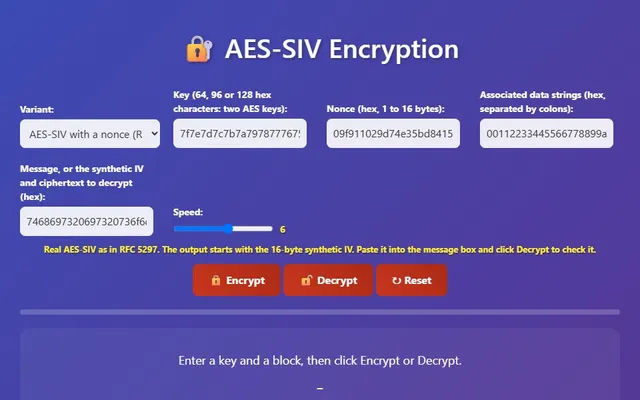
A visual representation of the AES-SIV Algorithm
Authenticated Encryption (AEAD) Advanced

The AES-SIV Algorithm

AES-SIV is an authenticated encryption mode that keeps working when a nonce is reused. Learn how its CMAC-based S2V function builds a synthetic IV, how that value becomes both the tag and the counter, and why SIV is the standard choice for key wrapping.

15 min read

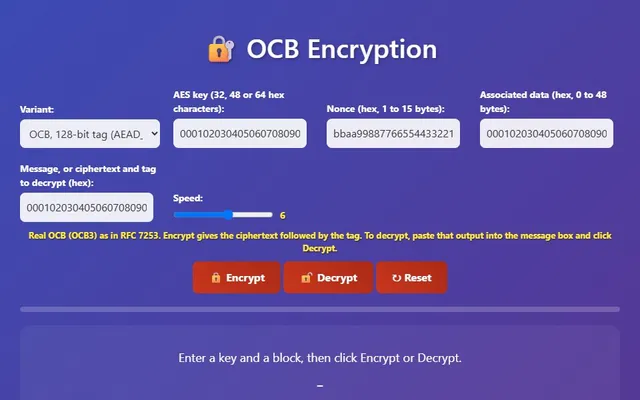
A visual representation of the OCB Mode Algorithm
Authenticated Encryption (AEAD) Advanced

The OCB Mode Algorithm

OCB encrypts and authenticates in a single pass, using about one AES call per block. Learn how its secret offsets turn AES into a tweakable cipher, how the tag comes from a checksum, and what the 2018 attacks on OCB2 mean for the version in RFC 7253.

17 min read

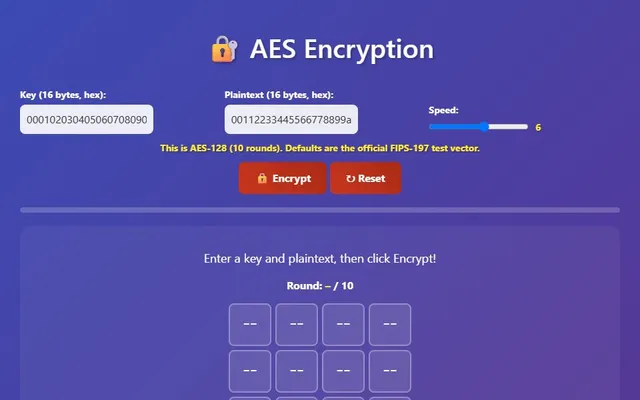
A visual representation of the AES Algorithm
Modern Block Cipher Intermediate

AES

AES secures nearly everything: HTTPS traffic, encrypted disks, and government secrets alike. Here's how the Rijndael cipher transforms data, round by round.

17 min read

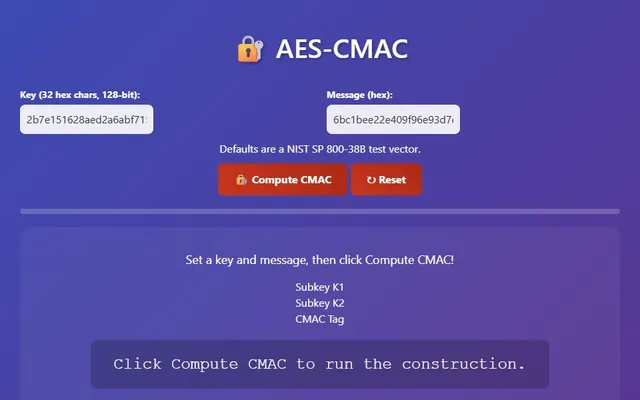
A visual representation of the CMAC Algorithm
Message Authentication Codes Intermediate

CMAC: Cipher-Based Message Authentication

What if you already have AES in your system and don't want to bring in a separate hash function just for message authentication? CMAC builds a MAC directly from a block cipher instead.

9 min read

← All tags