Cipher Visualizers home

Tag

#Digital Signature

8 articles with this tag.

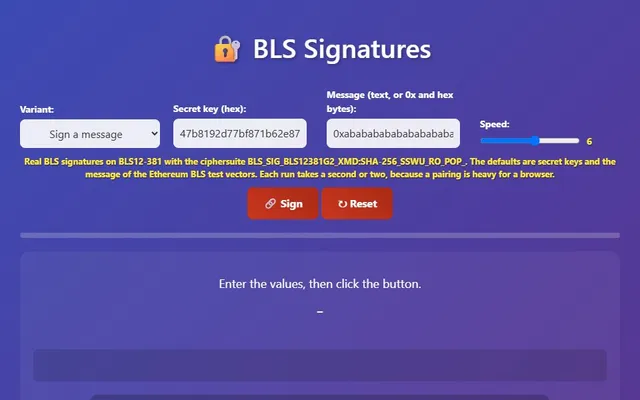
A visual representation of the BLS signature scheme
Modern Asymmetric Algorithms Advanced

BLS Signatures

BLS signatures use a bilinear pairing on the curve BLS12-381 to make short, deterministic signatures that can be added together into one. Learn how a pairing works, how a message is hashed to a curve, how aggregation saves space, and how a rogue key attack is stopped.

39 min read
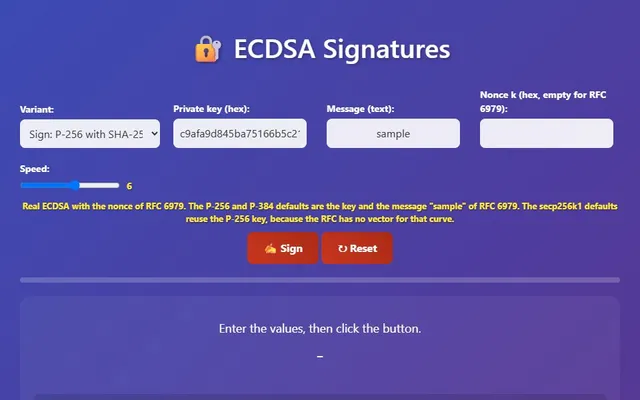
A visual representation of the ECDSA signature algorithm
Modern Asymmetric Algorithms Advanced

ECDSA: Elliptic Curve Digital Signature Algorithm

ECDSA is the elliptic curve version of DSA, used to sign TLS handshakes and Bitcoin transactions. Learn how signing and verifying work, why a repeated nonce reveals the private key, how RFC 6979 removes that risk, and how a signature is encoded.

23 min read

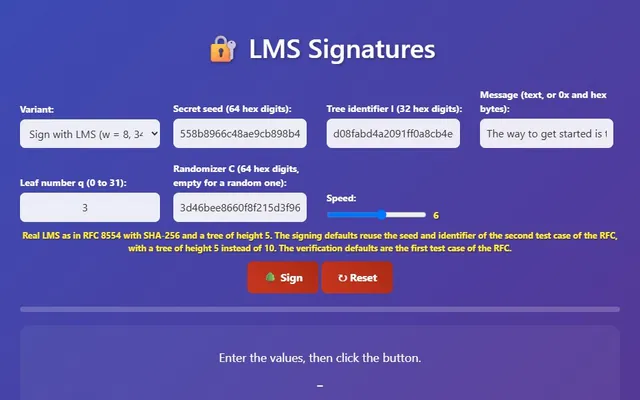
A visual representation of the LMS hash-based signature scheme
Post-Quantum Cryptography Advanced

XMSS and LMS Hash-Based Signatures

XMSS and LMS sign with nothing but a hash function, so quantum computers do not break them. Learn how Winternitz chains and Merkle trees work, why a signer must never reuse a one-time key, and how a reused key lets an attacker forge a message.

34 min read

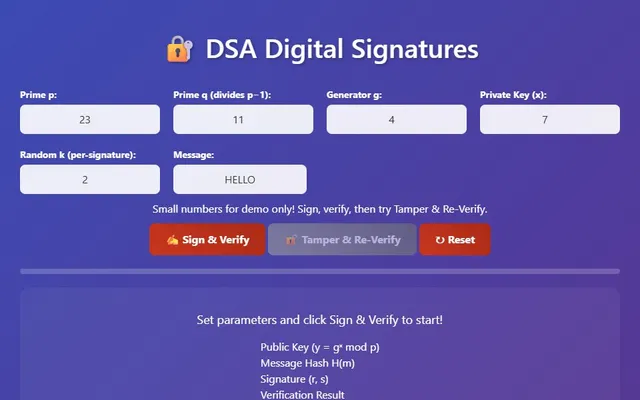
A visual representation of the DSA Algorithm
Classic Asymmetric Algorithms Intermediate

The DSA (Digital Signature Algorithm)

DSA was the U.S. government's answer to a simple question: how do you prove a message came from you, without RSA's patent? Learn how the Digital Signature Algorithm works, and why a single reused number sank Sony's PS3 security.

9 min read

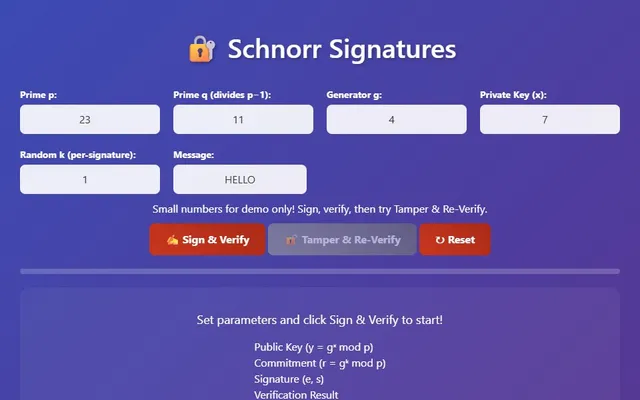
A visual representation of the Schnorr Algorithm
Classic Asymmetric Algorithms Intermediate

Schnorr Signatures

Schnorr signatures are what DSA might have been if a 20-year patent hadn't gotten in the way. Simpler, provably secure, and now at the heart of Bitcoin's Taproot upgrade: here's how they work.

8 min read

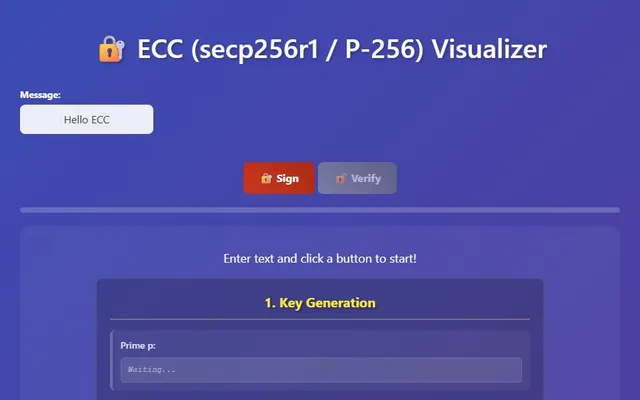
A visual representation of the ECC Protocol.
Modern Asymmetric Algorithms Advanced

Elliptic Curve Cryptography

ECC gets RSA-level security from far smaller keys. Here's the curve math behind it, and why it now powers most of the web.

13 min read

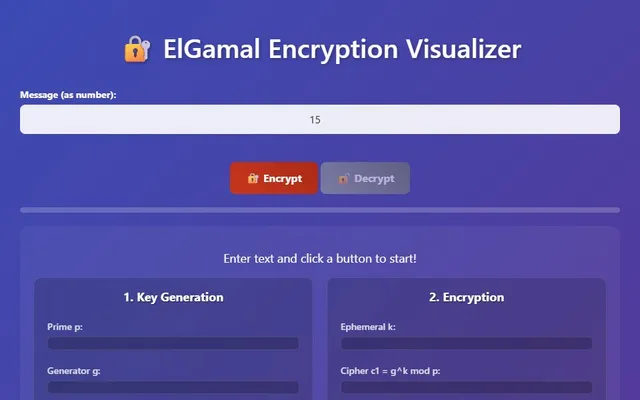
A visual representation of the ElGamal encryption scheme.
Modern Asymmetric Algorithms Advanced

ElGamal Encryption

ElGamal turns Diffie-Hellman key exchange into full public-key encryption. Here's how the discrete-log problem protects every message it sends.

7 min read

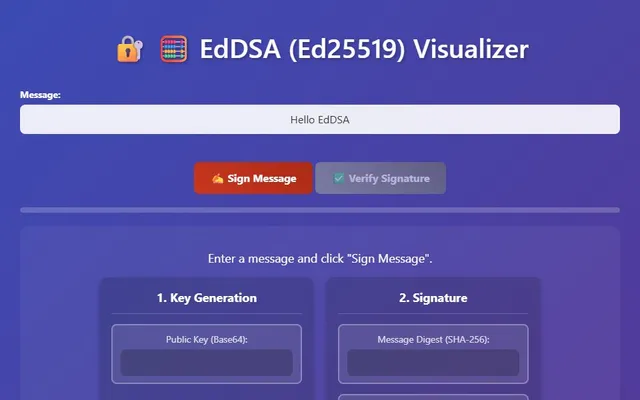
A visual representation of the EdDSA Protocol.
Modern Asymmetric Algorithms Advanced

EdDSA

EdDSA replaced random nonces with deterministic ones, closing off one of ECDSA's worst failure modes. Here's the math behind Ed25519.

8 min read

← All tags