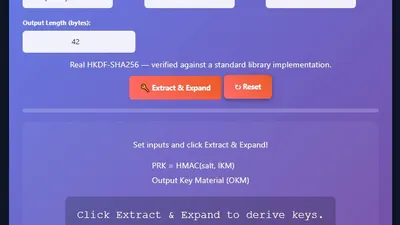
HKDF: HMAC-Based Key Derivation
TLS 1.3 and the Signal Protocol both lean on the same small, elegant primitive to turn a shared secret into however many separate keys they actually need. Here's how HKDF's extract-then-expand design works.
Tag Archive
Found 3 articles with this tag.
TLS 1.3 and the Signal Protocol both lean on the same small, elegant primitive to turn a shared secret into however many separate keys they actually need. Here's how HKDF's extract-then-expand design works.
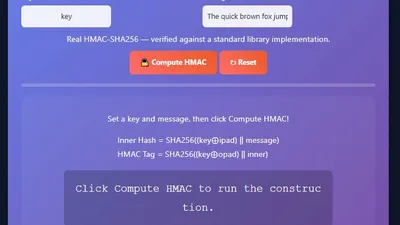
A hash alone can't prove a message wasn't tampered with — anyone can recompute it. HMAC fixes that by mixing in a secret key, becoming one of the most quietly essential building blocks in TLS, SSH, and beyond.
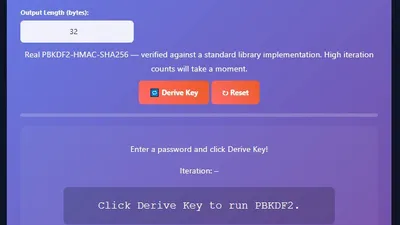
For nearly two decades, PBKDF2's answer to password cracking was simple: make every guess expensive by repeating a hash thousands of times. Here's how it works, and why memory-hard successors like Argon2 eventually surpassed it.