The 3DES (Triple DES) Algorithm
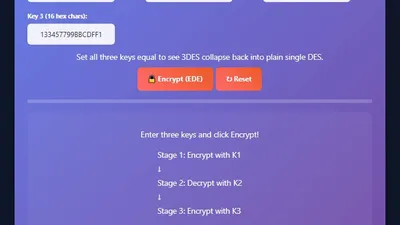
When DES's 56-bit key became too weak, the industry didn't design a new cipher from scratch — it just ran DES three times. Learn how Triple DES extended the life of the original standard for another two decades.
CATEGORY
Showing 5 post(s) in this category.
When DES's 56-bit key became too weak, the industry didn't design a new cipher from scratch — it just ran DES three times. Learn how Triple DES extended the life of the original standard for another two decades.
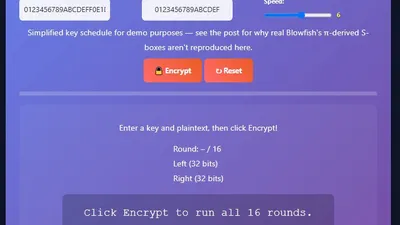
Bruce Schneier designed Blowfish as a free, fast alternative to DES, with a distinctive twist: its own S-boxes are generated from the encryption key itself. Learn how it works and why it's still found in legacy systems today.
The Data Encryption Standard ruled cryptography for over two decades. Learn how its Feistel network works, why its 56-bit key ultimately doomed it, and why it still matters as the foundation for 3DES and AES.
IDEA was one of the first ciphers to mix three completely different mathematical operations within a single round. Learn how this Swiss-designed algorithm became a mainstay of early PGP, and why it eventually gave way to AES.
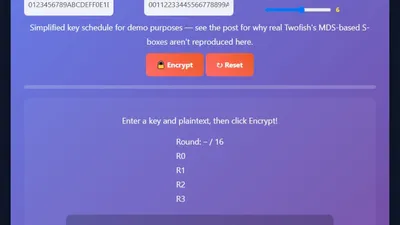
Twofish was Bruce Schneier's answer to Blowfish's biggest weakness — and one of the five finalists in the competition that ultimately chose AES. Learn how its Feistel network, PHT mixing, and key-dependent S-boxes work.