Breaking the Affine Cipher
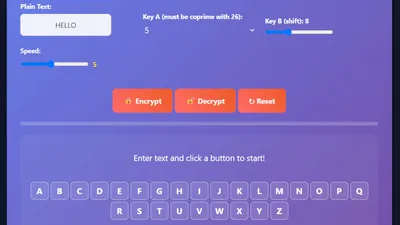
Learn how to break the Affine cipher by brute-forcing its entire 312-key keyspace and scoring each decryption with a common-word heuristic. It's the same strategy that cracks Caesar, just applied to a slightly bigger lock.
Tag Archive
Found 5 articles with this tag.
Learn how to break the Affine cipher by brute-forcing its entire 312-key keyspace and scoring each decryption with a common-word heuristic. It's the same strategy that cracks Caesar, just applied to a slightly bigger lock.
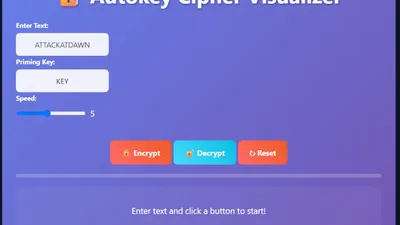
The Autokey cipher defeats Kasiski examination and the Index of Coincidence by never repeating its key. But the short priming key that starts everything off is still just a handful of letters, and one wrong guess collapses the entire decryption for you.
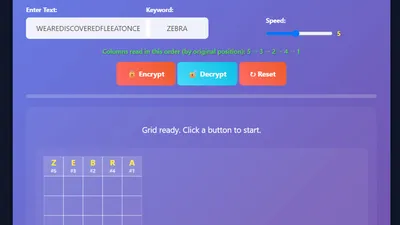
Columnar transposition doesn't hide letters. It just rearranges them, so frequency analysis finds nothing wrong. Learn the attack that actually works: brute-forcing every column order for each candidate key length, scored by common English substrings.
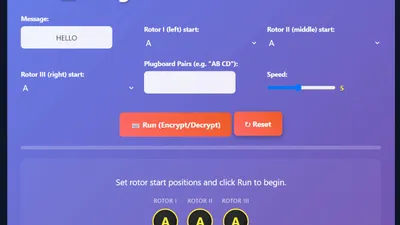
The real wartime Enigma resisted brute force because of two unknowns stacked on top of its rotor positions: which three rotors were chosen and in what order, and how the plugboard was wired. Together these push the key space past 10^20. Strip those two unknowns away and only 17,576 rotor positions are left, small enough for a modern computer to brute-force outright.
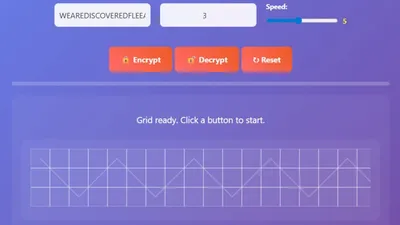
Every other transposition breaker on this site has to search over orderings. Columnar Transposition alone hides a factorial number of column arrangements behind its key. Rail Fence has no such trapdoor: the entire key is a single small number, so brute force checks every possibility outright.