The 3DES (Triple DES) Algorithm
When DES's 56-bit key became too weak, the industry didn't design a new cipher from scratch — it just ran DES three times. Learn how Triple DES extended the life of the original standard for another two decades.
Tag Archive
Found 36 articles with this tag.
When DES's 56-bit key became too weak, the industry didn't design a new cipher from scratch — it just ran DES three times. Learn how Triple DES extended the life of the original standard for another two decades.
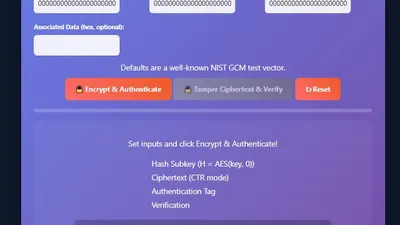
AES-GCM does two jobs at once: it hides your data AND proves nobody tampered with it. Learn how Galois/Counter Mode combines AES with GHASH authentication to become the default choice for TLS, IPsec, and disk encryption.
AES is the encryption algorithm that secures nearly everything: HTTPS traffic, encrypted disks, messaging apps, and government secrets alike. This comprehensive guide breaks down exactly how the Rijndael cipher transforms data, round by round.
Argon2 won the 2015 Password Hashing Competition by making brute-force attacks expensive in RAM, not just CPU time — closing off the GPU and ASIC cracking farms that broke older schemes. Here's how memory-hardness works.
In August 2025, NIST standardized a cipher small enough to run on a battery-powered sensor and simple enough to fit its whole state in five CPU registers. Learn how Ascon's sponge-based permutation delivers real authenticated encryption at a fraction of AES-GCM's footprint.
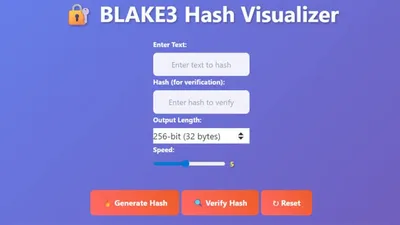
BLAKE2 and BLAKE3 have emerged as the preferred choice for new applications requiring high-performance hashing
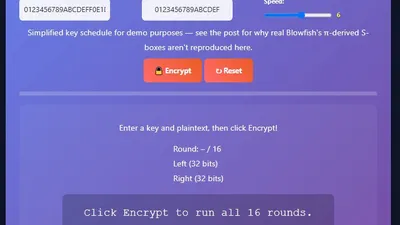
Bruce Schneier designed Blowfish as a free, fast alternative to DES, with a distinctive twist: its own S-boxes are generated from the encryption key itself. Learn how it works and why it's still found in legacy systems today.
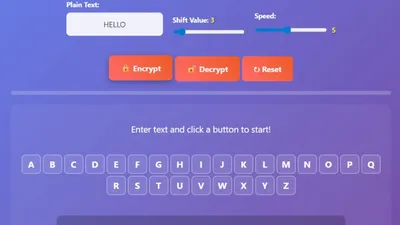
Learn about one of the simplest and most widely known encryption techniques, the Caesar cipher.
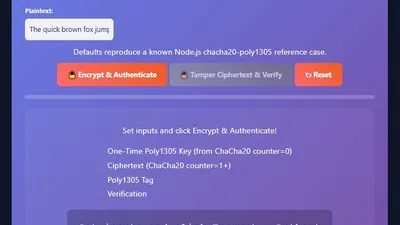
TLS 1.3's second mandatory cipher suite pairs ChaCha20 encryption with the Poly1305 message authenticator, delivering AES-GCM-equivalent security without needing any special hardware. Here's how the pairing works.
What if you already have AES in your system and don't want to bring in a separate hash function just for message authentication? CMAC builds a MAC directly from a block cipher instead.
The Data Encryption Standard ruled cryptography for over two decades. Learn how its Feistel network works, why its 56-bit key ultimately doomed it, and why it still matters as the foundation for 3DES and AES.
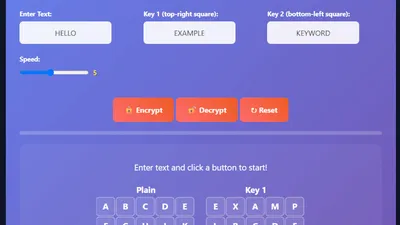
The Diffie-Hellman key exchange stands as one of the most revolutionary breakthroughs in modern cryptography, fundamentally changing how secure communications are established across insecure networks.
DSA was the U.S. government's answer to a simple question: how do you prove a message came from you, without RSA's patent? Learn how the Digital Signature Algorithm works, and why a single reused number sank Sony's PS3 security.
Elliptic Curve Cryptography (ECC) is a powerful and efficient form of public-key cryptography that leverages the mathematical properties of elliptic curves over finite fields.
The Edwards-curve Digital Signature Algorithm (EdDSA) is a modern public-key signature scheme that has gained significant traction in the world of cryptography for its high levels of security and efficiency.
ElGamal Encryption: A Comprehensive Guide to Public-Key Cryptography
TLS 1.3 and the Signal Protocol both lean on the same small, elegant primitive to turn a shared secret into however many separate keys they actually need. Here's how HKDF's extract-then-expand design works.
A hash alone can't prove a message wasn't tampered with — anyone can recompute it. HMAC fixes that by mixing in a secret key, becoming one of the most quietly essential building blocks in TLS, SSH, and beyond.
In March 2025, NIST picked a second code-based algorithm to back up Kyber — one that hides its noise completely differently from McEliece. Learn how HQC masks a public, unscrambled code with pure algebraic randomness instead.
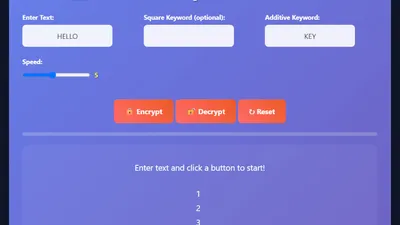
IDEA was one of the first ciphers to mix three completely different mathematical operations within a single round. Learn how this Swiss-designed algorithm became a mainstay of early PGP, and why it eventually gave way to AES.
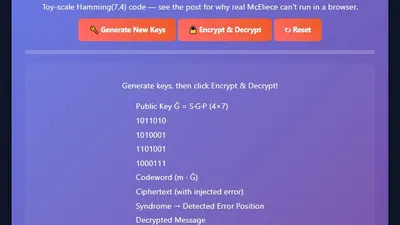
McEliece has survived over 45 years of cryptanalysis without ever being broken — and it's one of NIST's chosen post-quantum standards. Learn how hiding an error-correcting code behind scrambling matrices creates a public-key system quantum computers can't crack.
The MD5 represents a pivotal moment in cryptographic history
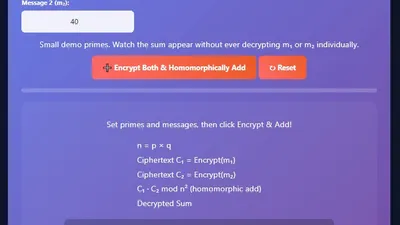
What if you could add two numbers together without ever decrypting them? Paillier encryption makes that possible — the mathematical trick behind private vote tallying and secure multi-party computation.
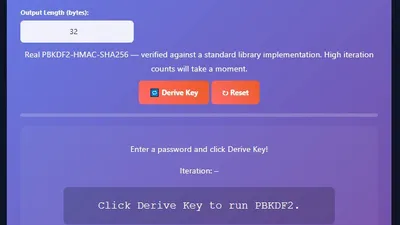
For nearly two decades, PBKDF2's answer to password cracking was simple: make every guess expensive by repeating a hash thousands of times. Here's how it works, and why memory-hard successors like Argon2 eventually surpassed it.
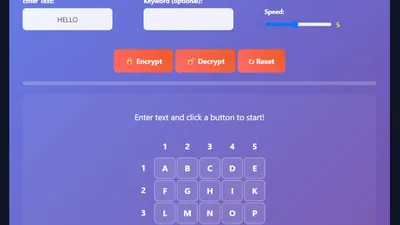
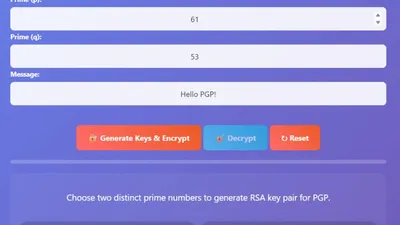
Understanding Pretty Good Privacy: Hybrid Encryption for Secure Messaging and Data
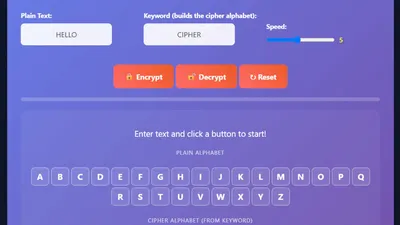
Learn about Mathematical Elegance in Classical Cryptography
RC4 was the simplest, fastest cipher of its era — powering SSL, WEP, and WPA for over a decade before a decade of accumulating bias attacks quietly killed it. Learn how it works and exactly why it's insecure today.
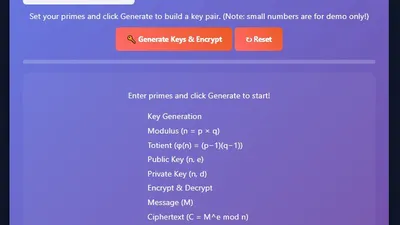
RSA is the algorithm that made public-key cryptography practical for the world. This comprehensive guide explores how RSA works, why it's secure, where it's used, and where it's headed as quantum computing looms.
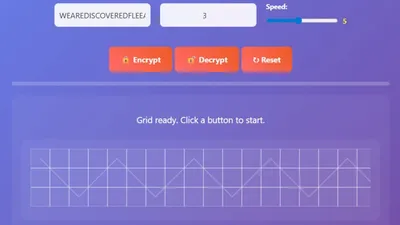
Designed by Daniel J. Bernstein as a fast, secure, RC4-free alternative for software encryption, ChaCha20 now secures TLS 1.3 and WireGuard alike. Learn how its add-rotate-XOR "quarter round" builds a full cipher from pure arithmetic.
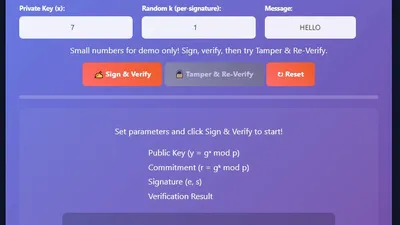
Schnorr signatures are what DSA might have been if a 20-year patent hadn't gotten in the way. Simpler, provably secure, and now at the heart of Bitcoin's Taproot upgrade — here's how they work.
Secure Hash Algorithm 1 was for years one of the most widely used cryptographic hash functions.
The SHA-2 family of cryptographic hash functions is the gold standard for digital security today.
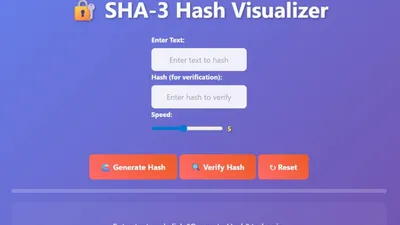
SHA-3, also known as **Keccak** (pronounced 'ketchak'), is the newest member of the Secure Hash Algorithm family standardized by NIST.
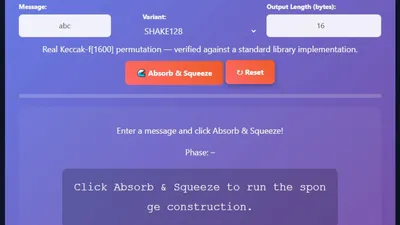
Most hash functions give you a fixed-size output no matter what you ask for. SHAKE breaks that rule — it's a hash function you can ask for any amount of output from, built from the same Keccak sponge as SHA-3.
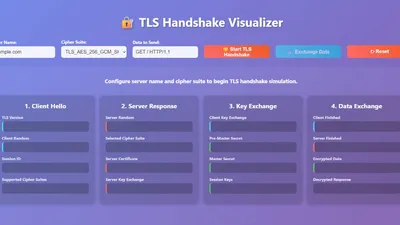
Understanding TLS: The Backbone of Secure Internet Communication
Twofish was Bruce Schneier's answer to Blowfish's biggest weakness — and one of the five finalists in the competition that ultimately chose AES. Learn how its Feistel network, PHT mixing, and key-dependent S-boxes work.